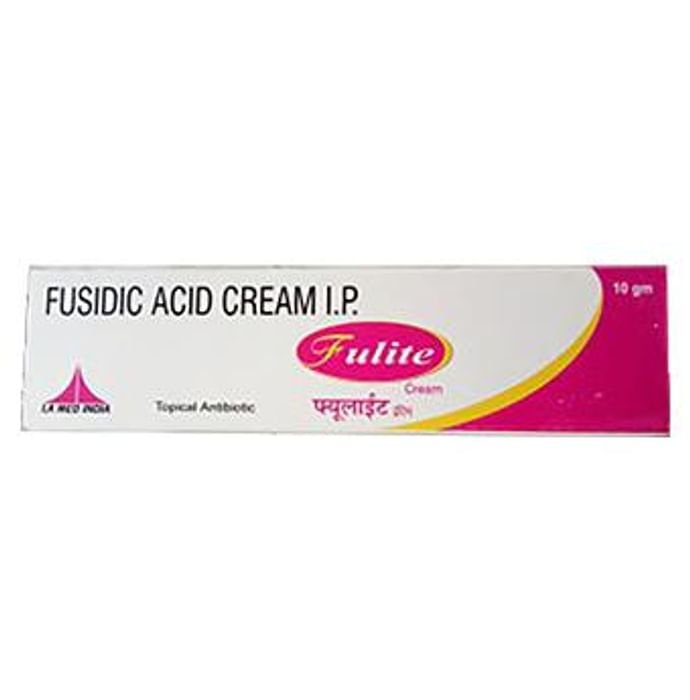
Fulite Cream is an antibiotic. It is used in the treatment of bacterial skin infections such as impetigo and infected dermatitis. It relieves the symptoms of the infection by stopping the further growth of the causative microorganisms. Fulite Cream should be used in the dose and duration as prescribed by your doctor. This medicine is for external use only and should be used regularly to get the most benefit from it. Don?t use more than you need as it won?t clear your condition faster and some side effects may be increased. The affected area should be clean and dry before medicine application. You must wash your hands thoroughly before and after applying this medicine. It may cause burning sensation, skin irritation, itching, and redness immediately following application over the affected area. However, these are temporary and usually subside on their own. Inform your doctor if they do not resolve or persist for a longer duration. Avoid direct contact with your eyes. In case of accidental contact, wash your eyes immediately with water and seek medical attention. Do not cover the area being treated with airtight dressings such as bandages unless directed by a doctor, as this may increase the risk of side effects. Tell your doctor if you are pregnant, planning to become pregnant, or are breastfeeding.
This medicine is for external use only. Use it in the dose and duration as advised by your doctor. Check the label for directions before use. Clean and dry the affected area and apply the cream. Wash your hands after applying, unless hands are the affected area.
Fulite Cream is an antibiotic. It works against bacteria that cause skin infections by preventing the synthesis of essential proteins necessary for the survival of bacteria. Thus, it prevents the skin infection from spreading.
- Alcohol : - No interaction found/established - Pregnancy : SAFE IF PRESCRIBED - Fulite Cream is generally considered safe to use during pregnancy. Animal studies have shown low or no adverse effects to the developing baby; however, there are limited human studies. - Breast feeding : SAFE IF PRESCRIBED - Fulite Cream is probably safe to use during breastfeeding. Limited human data suggests that the drug does not represent any significant risk to the baby. - Driving : - No interaction found/established - Kidney : - No interaction found/established - Liver : - No interaction found/established
If you miss a dose of Fulite Cream, apply it as soon as possible. However, if it is almost time for your next dose, skip the missed dose and go back to your regular schedule. Do not double the dose.
Q. Is Fulite Cream an antifungal or a steroid? What is it used for?::: Fulite Cream is neither an antifungal nor a steroid. It is an antibiotic that is effective against bacteria. It is used to treat bacterial infections of the skin like impetigo (a weeping, crusty and swollen patch of skin), infected cuts and grazes, and infected dermatitis (skin becomes red, slightly swollen, and painful due to infection).| Q. For how long is it required to use Fulite Cream?::: Use the Fulite Cream for the time advised by your doctor. The treatment with Fulite Cream usually stretches for 1-2 weeks although it can be longer in some cases.| Q. What precautions should I take while applying Fulite Cream?::: Fulite Cream is meant to be applied only on the skin. Always wash your hands before applying the medicine. Unless you are using the cream to treat your hands, always wash your hands after using Fulite Cream. Do not insert it into your body or swallow it. If it accidentally enters your eyes, wash your eyes thoroughly with water. If irritation persists, contact your doctor immediately.| Q. What is drug resistance? Does it mean that even Fulite Cream may turn ineffective?::: Sometimes the bacteria get modified in your body and the medicine stops working. This is called drug resistance. Extended or recurrent use of medicine may increase the risk of developing resistance to that medicine. Your body may develop resistance for Fulite Cream too. Therefore, to prevent drug resistance, you should use Fulite Cream in the right amount and for the duration recommended by the doctor.| Q. What should prompt me to stop using Fulite Cream?::: If you develop a severe allergic reaction after using Fulite Cream, wash the area thoroughly and do not use the medicine again. The symptoms of an allergic reaction include a severe rash, difficulty in breathing, stinging or burning in the eye which does not go away, and swelling of the face (especially around the eyes or eyelids). You should immediately seek the medical support of your doctor or go to a nearby hospital.| Q. For how long is it required to use Fulite Cream?::: Use the Fulite Cream for the time advised by your doctor. The treatment with Fulite Cream usually stretches for 1-2 weeks although it can be longer in some cases.| Q. What precautions should I take while applying Fulite Cream?::: Fulite Cream is meant to be applied only on the skin. Always wash your hands before applying the medicine. Unless you are using the cream to treat your hands, always wash your hands after using Fulite Cream. Do not insert it into your body or swallow it. If it accidentally enters your eyes, wash your eyes thoroughly with water. If irritation persists, contact your doctor immediately.| Q. What is drug resistance? Does it mean that even Fulite Cream may turn ineffective?::: Sometimes the bacteria get modified in your body and the medicine stops working. This is called drug resistance. Extended or recurrent use of medicine may increase the risk of developing resistance to that medicine. Your body may develop resistance for Fulite Cream too. Therefore, to prevent drug resistance, you should use Fulite Cream in the right amount and for the duration recommended by the doctor.| Q. What should prompt me to stop using Fulite Cream?::: If you develop a severe allergic reaction after using Fulite Cream, wash the area thoroughly and do not use the medicine again. The symptoms of an allergic reaction include a severe rash, difficulty in breathing, stinging or burning in the eye which does not go away, and swelling of the face (especially around the eyes or eyelids). You should immediately seek the medical support of your doctor or go to a nearby hospital.